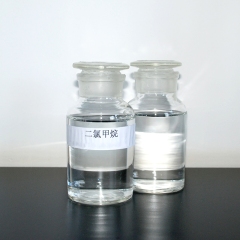
Product Overview
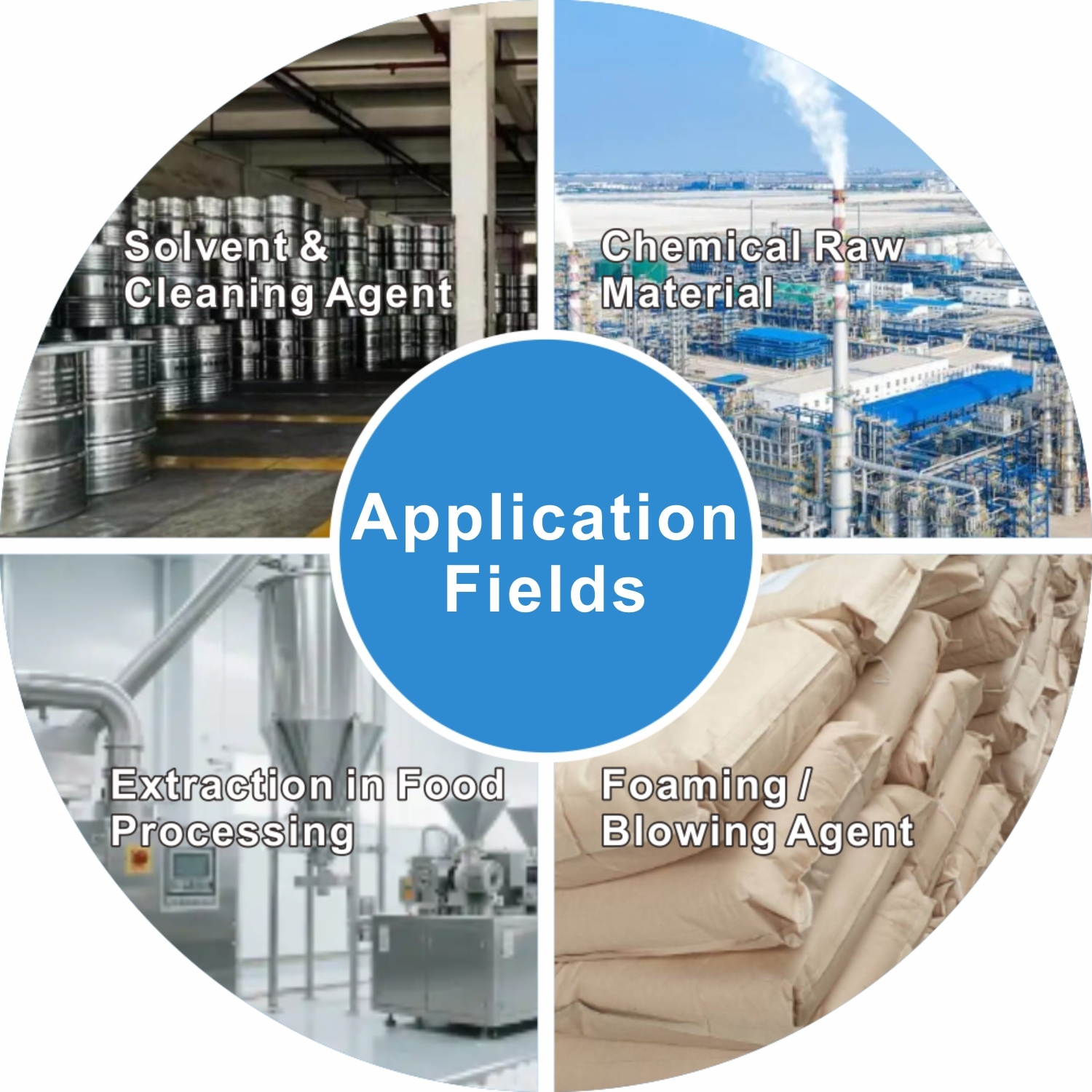
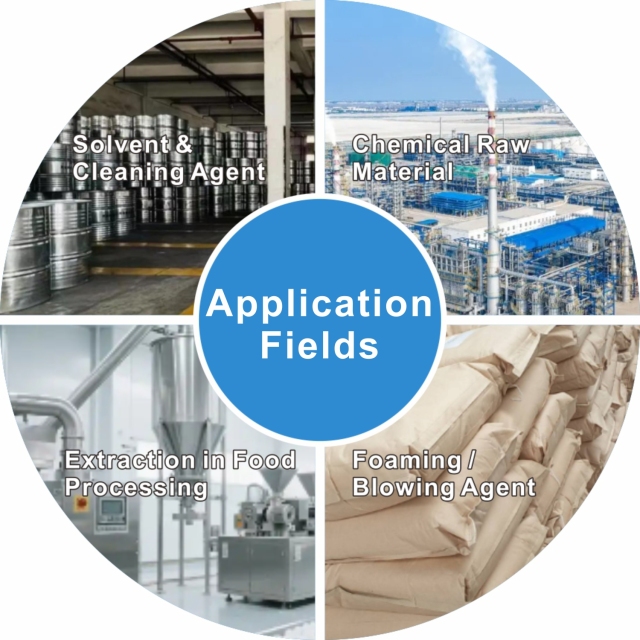
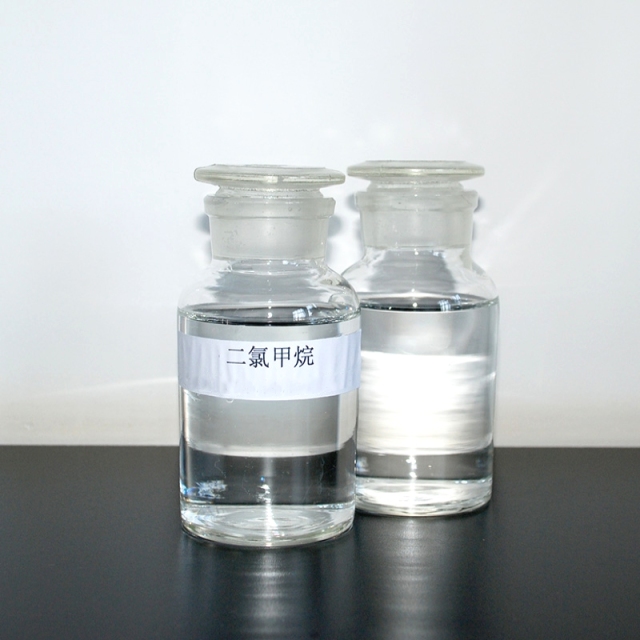
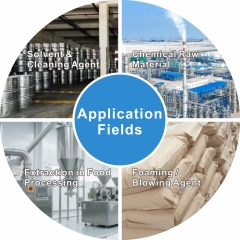
Dichloromethane — written just as often as methylene chloride — is a clear, colourless chlorinated solvent with a faintly sweet, ether-like odour. Its character comes from one unusual combination: it boils low enough to dry a part in seconds, yet it has no flash point at all. A fast-drying solvent that will not ignite changes what a plant can put next to welding bays, drying ovens and hot work, where most fast-evaporating solvents need fire separation and special permits. Four duties dominate. Metal shops use it to degrease before plating, painting or welding; refinishers and maintenance teams strip cured paint, lacquer and powder coatings with it; extraction suites pull alkaloids and flavour compounds into it and crystallise them back out; and foam plants run it as a blowing agent or processing solvent for polyurethane and polycarbonate. The plant sits in Dongying, inside the Bohai Rim petrochemical cluster, which puts feedstock, road tankers and the port within a short haul. We operate as one of the industrial chemicals suppliers in that cluster rather than as a buyer reselling someone else's drum.
Safety, Ventilation and Handling
- Start with ventilation, not with the product.
- The vapour builds quickly and is heavier than air, so extract at low level and keep equipment closed wherever the process allows.
- Transfer through pumps or closed lines and keep drums lidded.
- Open decanting into buckets is where most exposure incidents in cleaning rooms begin.
- Control heat around the process.
- There is no flash point to manage, unlike flammable chemicals, but the vapour decomposes at high temperature into irritant products, so keep ovens, flames and hot work away from open solvent.
- Dress for the job: chemical-resistant gloves, goggles and an apron, plus respiratory protection where local extraction cannot keep vapour out of the breathing zone.
- Work to your local occupational exposure limit and train operators against it; the figure differs by country, and the safety data sheet carries the one that applies to you — which makes it the first document to check when you compare industrial chemicals suppliers.
- Plan for spills and spent solvent before the first drum is opened: absorbent, ventilation and a licensed waste route.
- Cleaning teams that blend their own industrial cleaners and degreasers should treat spent solvent as hazardous waste, never as a drain-safe liquid.
Metal Degreasing and Precision Cleaning
- Immersion and spray degreasing.
- Machining oils, stamping lubricants and drawing compounds come off pressed and turned parts, and the thin, low-viscosity liquid reaches blind holes and fine threads that a gel cleaner never wets.
- Vapour degreasing.
- Parts loaded into hot vapour, or dipped into a boiling sump, are cleaned by the condensing film and come out dry.
- There is no rinse stage and no drying oven, which is why the process fits continuous lines.
- Precision parts and electronics.
- Flux residues, lapping compound and light oils lift from small components without a water-based wash that would stain surfaces or leave moisture trapped in connectors.
- Tooling, moulds and dies.
- Baked-on grease, release agent and softened polymer come off steel tooling, and what is left inside a deep cavity evaporates instead of having to be wiped out by hand.
- Rebuild and maintenance work.
- Wiping or dipping parts during a rebuild is practical because nothing has to dry before the assembly goes back together.
- A building block for blended products.
- Formulators at industrial chemicals manufacturers use it as the active solvent in cleaners and degreasers aimed at oils, waxes and resin residues that water-based systems cannot shift.
- Cold cleaning and dip tanks.
- In industrial cleaning chemicals for dip-tank and cold-cleaning duty it is usually blended with a slower-evaporating co-solvent, which keeps the liquid wet on the part long enough to work.
Paint and Coating Stripping
- Confirm the substrate and the coating system before anything is applied.
- Cured alkyds, two-pack epoxies, polyurethanes and powder coatings all swell and release, but the same solvent softens many plastics, so an offcut test comes first.
- Set the area up around the part: low-level extraction, a tray to catch stripped film, and absorbent within reach for drips.
- The vapour is what has to be controlled here, not fire.
- Lay down a flooded wet film by brush, roller or dip, so the solvent reaches the coating-to-substrate interface instead of sitting on the surface.
- Leave it to dwell.
- The film wrinkles and lets go from underneath; on thick or multi-layer systems, cover the surface or add a slower-evaporating co-solvent so the solvent does not disappear before the bond breaks.
- Lift the softened coating with a scraper, working in sections.
- A second pass usually clears primer and edges.
- Wipe or rinse the stripped surface.
- No oily film is left behind, so the part can go straight to inspection, repair or repainting, and there is no flash point to engineer out — one hazard fewer than with the flammable chemicals used in many conventional removers.
- If you are formulating rather than stripping, build the remover with a thickener for vertical surfaces and a slower co-solvent for dwell time; the same base goes into industrial cleaning chemicals for paint-line clean-up and dip-stripping baths.
Extraction, Foaming and Synthesis Uses
Pharmaceutical and flavour extraction. Alkaloids and other active ingredients are extracted into the solvent and then crystallised back out of it; the same solvency pulls flavour compounds from raw materials in food processing.
Solvent removal without heat damage. Because it boils far below the temperature that degrades most actives, it distils out of the extract under mild conditions and is recovered for the next batch — a large part of why extraction suites choose it over higher-boiling solvent chemicals.
Blowing agent for polyurethane foam. Dosed into the foam formulation as a physical blowing agent, it vaporises as the reaction exotherm builds and the expanding vapour opens the cell structure before the solvent leaves the matrix.
Processing solvent for polycarbonate and polyurethane. It dissolves these polymers for casting, coating and handling at lower temperatures, then evaporates out of the finished part.
Reaction medium and other process uses. It works as a reaction medium in chemical synthesis, as a solvent in film production and as an aerosol propellant, often sitting alongside other organic chemicals in the same plant.
Bought as part of a longer list. Plants rarely buy this grade on its own. Taking it from an industrial chemicals wholesaler who also carries the ethers, esters and acids on the same list saves a second set of shipping documents and a second supplier audit.
Specifications
| Chemical name | Dichloromethane (methylene chloride) |
| CAS number | 75-09-2 |
| EINECS number | 200-838-9 |
| Molecular formula | CH₂Cl₂ |
| Chemical family | Chlorinated organic chemicals |
| Product type | Chlorinated solvent chemicals |
| Purity | ≥99.5% |
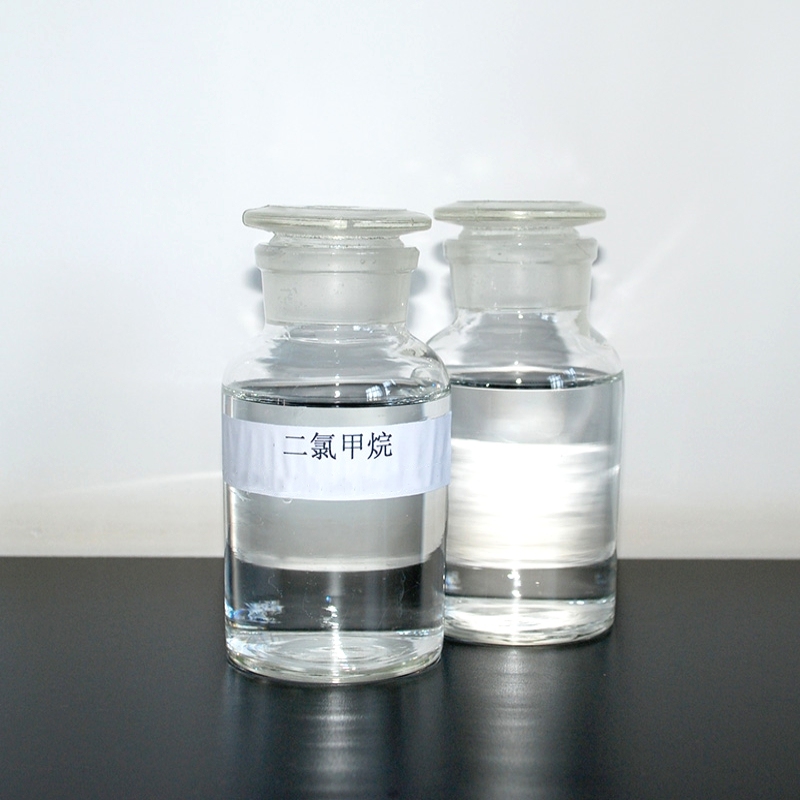
| Appearance | Clear, colourless liquid with a slightly sweet, ether-like odour |
| Boiling point | 39.6 °C |
| Melting point | −96.7 °C |
| Viscosity | 0.44 mPa·s at 20 °C |
| Vapour pressure | 57.3 kPa at 25 °C |
| Water solubility | Slightly soluble; neutral acidity |
| Flash point | None — non-flammable, but the vapour can decompose at high temperature |
Ordering and Delivery
| Packing | Drum and tank truck supply |
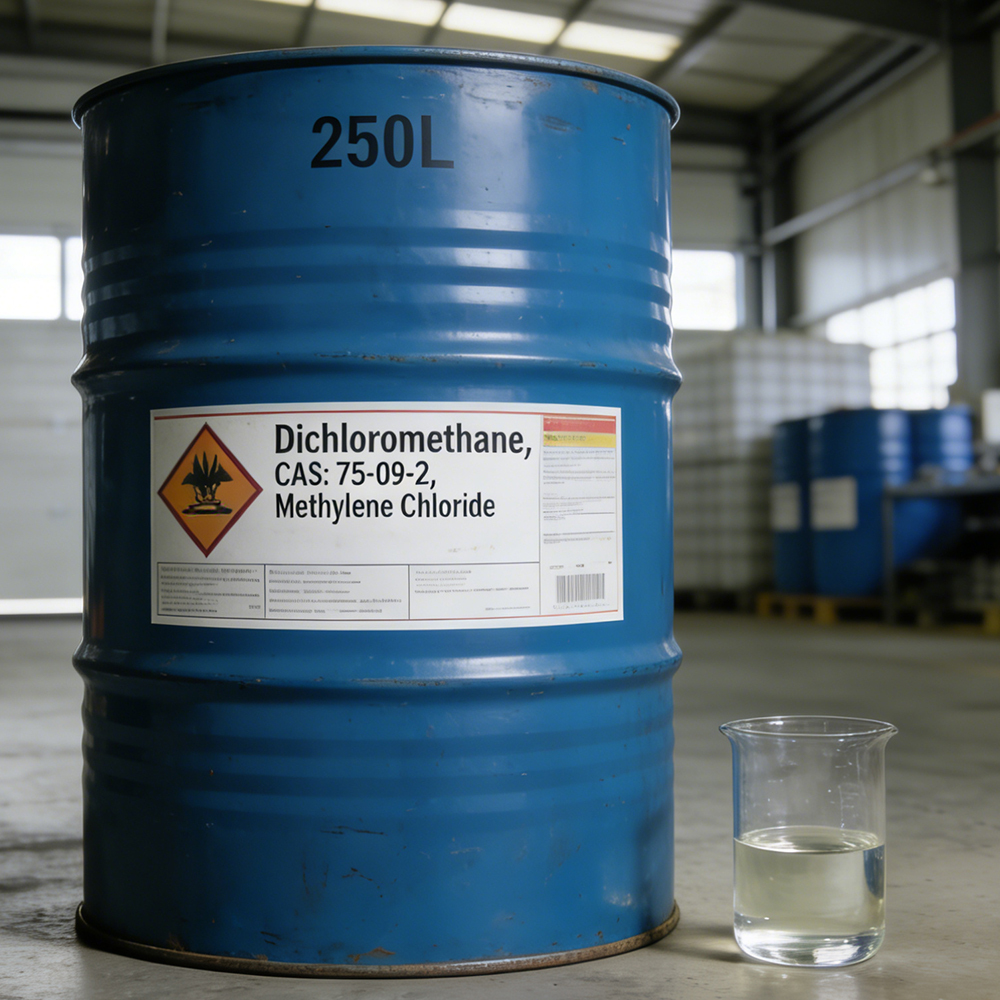
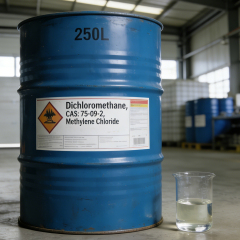
| Drum formats | Steel and plastic drums, including the 250 L drum shown in our product photos |
| Bulk formats | IBC tanks, flexitanks and ISO tanks for larger volumes |
| Minimum order | One 20-foot container (20' FCL) per product |
| Payment | T/T and L/C as standard; other arrangements can be discussed case by case |
| Lead time | Generally within 14 working days of the deposit or the original L/C |
| Pricing | Volume-based, agreed against your order quantity |
| Custom requirements | Assay, moisture and packing requirements discussed with our technical team |
| Origin | Dongying, Shandong, China — supplied direct by industrial chemicals manufacturers |
| Supply role | Industrial chemicals wholesaler for the wider solvent range, alongside our own production |
Scale & Supply Capability
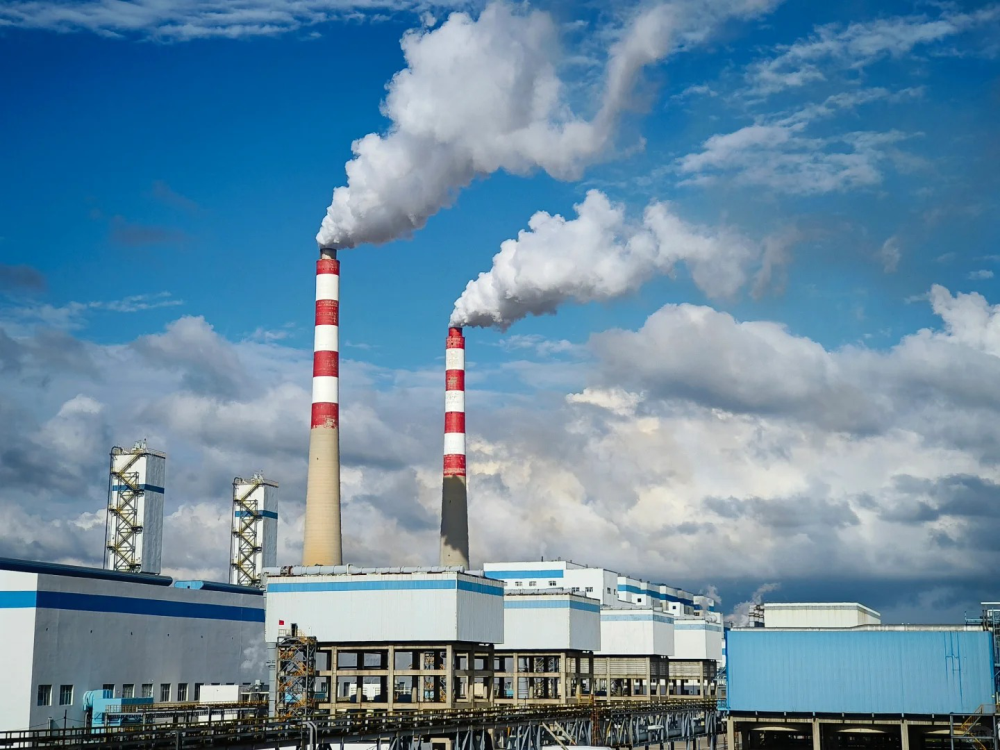
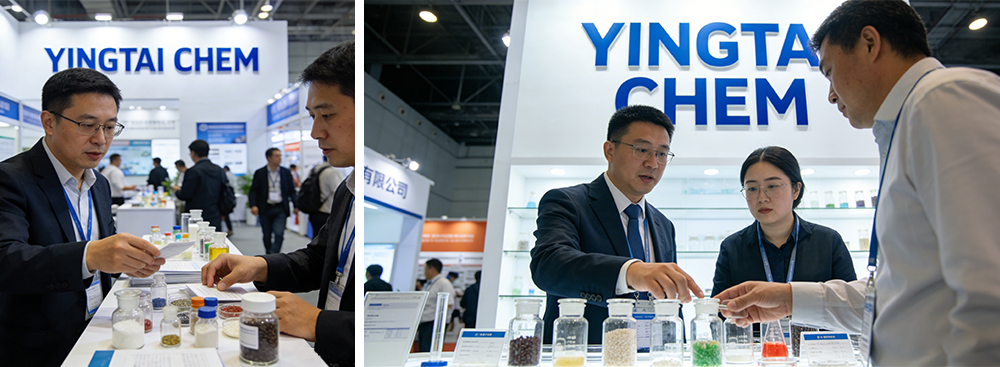
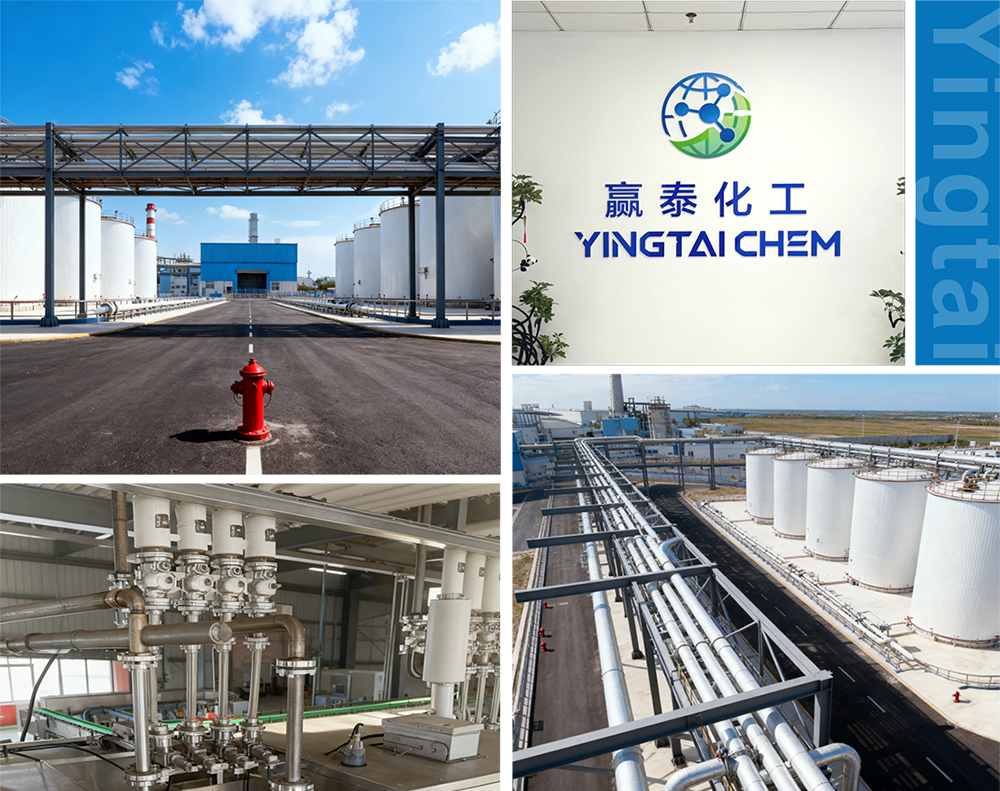
Shandong Yingtai Chemical Co., Ltd. operates from a 60,000㎡ facility in Dongying, Shandong — the heart of China's petrochemical industry and home to the Shengli Oilfield. Our team of more than 200 people handles R&D, production and sales across seven core chemical categories, with park-based plants, automated control systems and integrated utilities supporting end-to-end production. As an integrated manufacturer and trader, we combine in-house output with supply chain coordination to keep quality and delivery stable for buyers in the Middle East, Russia and worldwide. Custom specifications are discussed case by case with our technical team.
Chlorination, then distillation. We produce this grade by chlorination and purify it by distillation at our Dongying plant, which is where the ≥99.5% assay, the low moisture and the low acid value come from. Readings that decide batch behaviour. Purity, moisture, acid value and evaporation residue are the four figures that determine whether a solvent performs the same in a summer delivery as in a winter one. EPR quality management system. Production runs under a documented system covering raw materials through to the finished drum, so what leaves the plant matches what was released. Paperwork with every parcel. A certificate of analysis for the batch, the technical data sheet and the safety data sheet travel with the shipment — the documents industrial chemicals manufacturers are asked for before a first order is released. Third-party verification. You can book an SGS on-site inspection of the lot before it is loaded, or ask your sales contact about sample availability so your own laboratory can run the assay first. Loading that matches the paperwork. Loading and hazardous-goods transport follow SOP procedures, backed by our own warehousing and logistics platform. Stock behind the order. Beyond our own production we hold buffer stock across the wider range, so a repeat order does not hang on a single plant campaign — the side of the business an industrial chemicals wholesaler normally runs, except that here the warehouse sits next to the plant.
FAQ
Is dichloromethane the same product as methylene chloride?
Both names describe the same chlorinated compound — CAS 75-09-2, EINECS 200-838-9 — and it also appears as DCM or methylene dichloride. Specifications, certificates of analysis and shipping papers may use any of them, so match on the CAS number when comparing documents from different solvent chemicals suppliers. If the CAS matches, the material is the same.
Will it strip a cured powder coat or a two-pack epoxy?
Both systems soften and release, but the time depends on film build and on how old the coating is. A single coat of lacquer or alkyd lifts quickly; a thick powder coat or a fully cured epoxy usually needs a flooded application, a longer dwell and a second pass, and the primer underneath often needs its own application. Test an offcut of the same coated part before working on a visible panel, and keep run-off away from plastic trims and seals.
Can I run it in an existing vapour degreasing unit?
Usually yes, and the low boiling point is exactly what makes vapour degreasing work: the condensing film cleans the part and the part leaves dry. Two checks come first — confirm with the equipment maker that the gaskets, seals, hoses and pump internals are rated for chlorinated solvents, and clean out the sump if the unit last ran on a different chemistry. Sites that use industrial cleaners and degreasers across a mixed product range often run several chemistries through one bay, and that is where cross-contamination starts. Unlike flammable chemicals, there is no flash point to design around, so extraction and cooling-coil performance matter more than fire separation.
How does it behave when water is part of the process?
Dichloromethane is only slightly soluble in water and neutral in reaction, so it separates cleanly from an aqueous phase instead of carrying acidity into the product. That behaviour is what makes it useful in extraction and in multi-step organic chemicals work where a wet intermediate has to be handled without a drying stage in between. A small amount of water still stays in the solvent layer, so if your specification is tight on moisture, tell us the limit and we will confirm what the batch record supports before the order is placed.
Does the grade leave a film on the parts I clean?
Evaporation residue is kept minimal, and moisture and acid value are low, so parts come out dry rather than tacky and plated or painted surfaces do not pick up a haze from the solvent. That is usually the difference between a grade that works and one that keeps sending parts back for re-cleaning, which is why the residue figure is worth checking and not just the assay when you compare industrial cleaning chemicals for a plating or coating line. If you work to a gravimetric residue limit or a contact-angle check, send the requirement with your inquiry.
Will it attack the plastic components or seals it touches?
It softens many thermoplastics and swells some elastomers, so unintended contact can leave a part sticky or crazed — although that same effect is exactly what makes the solvent useful in polymer processing when it is deliberate. Metal, glass and most ceramic surfaces are unaffected. Before a line is converted, soak a sample of every gasket, hose and plastic fitting for the expected contact time and check for swelling, softening or weight change, and keep exposure short with strong extraction wherever plastics have to stay in place.